
Taking a video course is one of the fastest ways to build skills in content creation, editing or shooting. 🎥
But watch out ⚠️: taking a course doesn't guarantee you'll progress. Many learners watch the lessons, take notes... then stall.
Why? Because they don't apply the right methods.
To help you avoid the same mistake, here are 10 practical tips to succeed in a video course, stay motivated and turn your knowledge into results! ✨
1. Set a clear goal before starting your video course
Before you even start your first lesson, ask yourself a simple question: why am I taking this course? 🎯 Your goal might be to:
- Create videos for social media.
- Become an editor or videographer.
- Improve your company's communication.
- Launch a personal project.
2. Follow the lessons in order (and don't skip around)
An online course is built like a path. 📍 Each step builds on the previous one:
- Editing basics.
- Camera work.
- Advanced techniques.
- Complete production.
3. Get hands-on quickly (the key point)
This is the most common mistake: consuming content without practicing.
Ideally, after each course video, you should:
- Reproduce what you just learned.
- Try out the tools.
- Create a mini-project.
Even 30 minutes of practice makes a difference in retaining what you learn in the course.
You learn by doing, not by watching. And that goes for video too. 😊
4. Create videos regularly to keep improving
Even if it's not perfect (perfection doesn't exist ✨), regularly creating short formats, testing different styles or techniques, and publishing on several platforms and in various formats... really helps you raise your level, understand what works and gain confidence.
Progress doesn't stop at the end of the curriculum. So even after the course, keep being consistent and stay active to maintain your level (especially in a field like video or social media, where techniques evolve constantly and very quickly).
5. Master the basics of video editing
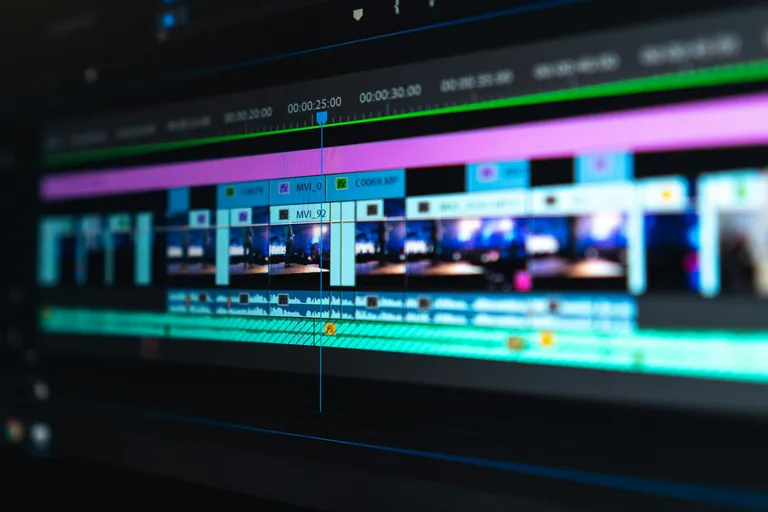
Before chasing advanced effects, focus on the basics: cutting efficiently, structuring a video, managing pacing, taking care of the audio.
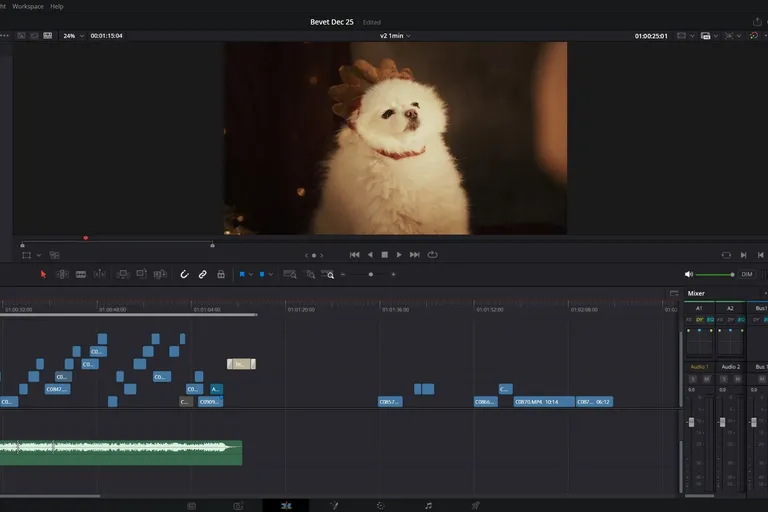
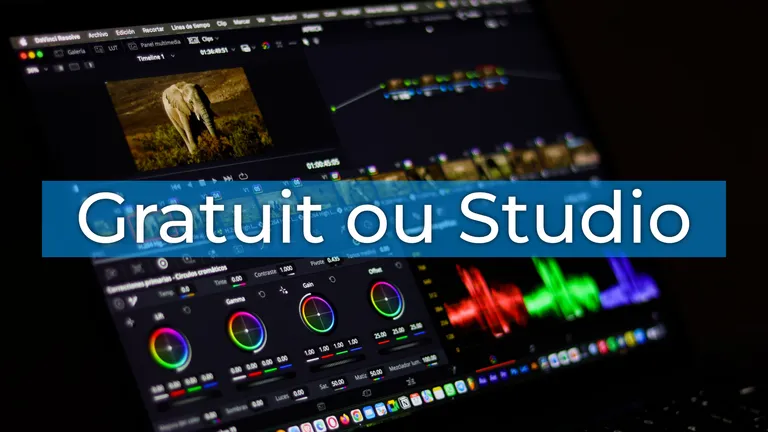
We recommend working with standard software to create professional videos, such as Adobe Premiere Pro or DaVinci Resolve. ⚙️
6. Keep your gear simple (smartphone or camera)
You don't need expensive equipment to get started. 📲 A recent smartphone is enough to:
- Shoot in good quality.
- Practice your camera work.
- Test your ideas.
What matters most is still framing, lighting and sound.
7. Organize your time and your learning environment
Taking an e-learning course takes discipline. To stay efficient:
- Block out regular time slots (for example, 2 to 3 hours a week).
- Avoid distractions.
- Work in a quiet environment.
8. Take notes and organize your knowledge
Don't just watch the videos: that's the best way to retain nothing. ❌
Take notes too, so you memorize better, find information more easily and structure your learning. With this method, you can build your own guide on:
- Important techniques.
- Software shortcuts.
- Production steps.
9. Ask questions and look for feedback
If your course offers support or coaching (Creator Academy's coaching is in French), use it to ask questions about:
- Your edits.
- Your creative choices.
- Your difficulties.
10. Work on real projects (not just exercises)
Exercises are useful, but they're not enough to strengthen your skills and build up your portfolio. 👇🏼 To really progress, you absolutely need to:
- Create real projects (for example: a social media video, an educational video, a presentation...).
- Simulate client needs.
- Work on a variety of formats.
Recap: the method for succeeding in a video course
A video course is an excellent lever... as long as you use it properly. 🏆 To succeed:
- Set a clear goal.
- Follow a structured path.
- Practice regularly (even after the course).
- Work on real projects.
- Look for feedback.
It's not the course that makes the difference, it's what you do with it. ⚡ With the right method, a few hours a week are enough to transform your level and start creating professional-quality videos.
Take action with Creator Academy
Want to apply these tips in a structured setting? Creator Academy 🎓 offers a complete video course (taught in French) to learn editing, shooting and content creation with practical, hands-on methods.
FAQ - Succeeding in a video course
How much time should you spend on a video course?
Ideally 2 to 5 hours a week to progress efficiently.
Do you need professional gear to get started?
No, a smartphone and editing software are more than enough at first.
Which software should you choose as a beginner?
DaVinci Resolve is free and very complete. Adobe Premiere Pro isn't free but is also widely used.
How do you know if you're making progress?
Compare your first videos with the later ones: editing, pacing, audio and visual quality.
You can also ask experts or potential clients for feedback.