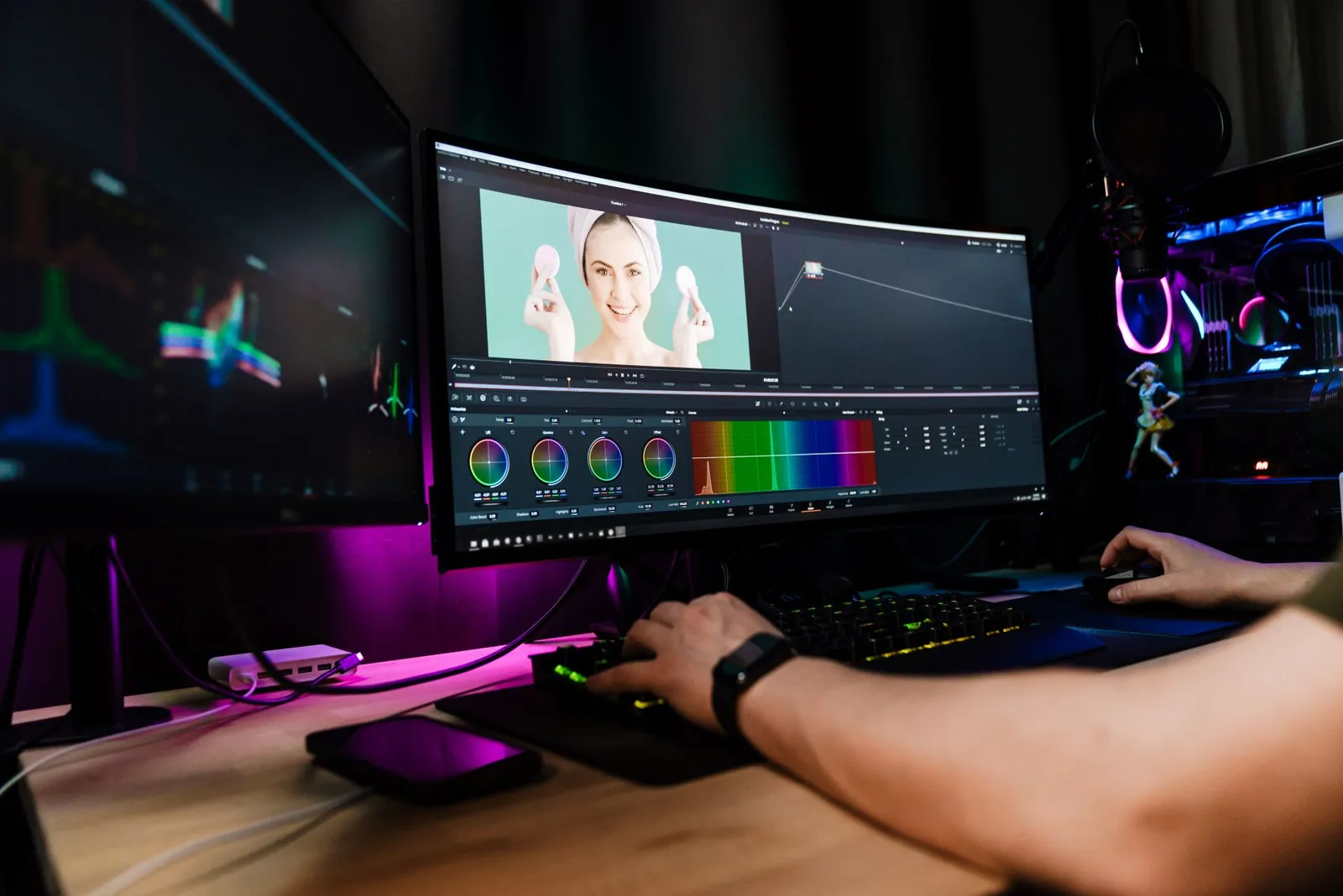
Learning video has never been more accessible than it is today. Between YouTube, free tutorials and online resources, it's tempting to think that a video course isn't necessary anymore.
Yet in reality, many beginners stall. They watch hours of content, binge video after video... but make little progress.
Why? Because learning on your own isn't the same as following a real structured learning path with guidance.
Let's look concretely at why, compared to YouTube alone, a video course helps you master real skills, progress faster and build a solid professional project.
Video course vs YouTube: a difference in structure and results
YouTube is an excellent source of information. But it isn't a curriculum.
On YouTube, you get:
- Scattered content.
- Mixed levels.
- Little logical progression.
- No validation of what you've learned.
A video course, on the other hand, lets you spend less time searching and more time practicing, thanks to:
- A structured path from beginner to advanced level.
- Lessons organized by topic (shooting, editing, audio, etc.)
- A progression designed to help you master each step.
- A clear goal: making you self-sufficient.
Learning video editing: why a complete curriculum makes the difference
Video editing is a technical craft. Knowing a few effects isn't enough to become an editor.
A complete course (like the ones at Creator Academy) lets you:
- Understand the basics of video editing.
- Work in software like DaVinci Resolve, Adobe Premiere Pro or After Effects.
- Learn visual storytelling techniques.
- Master audio, images and pacing.
On YouTube, you'll find isolated tutorials.
In a course, you follow a complete logic: from the shoot all the way to the final production.
Online course vs self-learning: a huge time saver
Many people spend dozens of hours on YouTube without any real progress. Why?
- They're constantly looking for the right information.
- They run into content of uneven quality.
- They don't have a clear plan.
With an online course, on the other hand, you can save time and quickly reach a level that some people take years to reach on their own, with:
- Direct access to the right resources.
- An optimized curriculum.
- A method tested by experts.
Video courses and jobs: a real professional lever
Learning on your own is good. Landing a job or clients is better.
That's exactly what a serious course helps you do: turn a skill into a professional opportunity:
- Get ready for the market.
- Understand what clients expect.
- Build a solid portfolio.
- Work on real projects.
- Position yourself as an editor or videographer.
Certified courses, CPF and funding: a reassuring framework
Unlike YouTube, a video course can be supervised and recognized:
- A certification or a certificate of completion.
- Funding through the CPF (France's personal training account) for some courses, depending on the provider.
- Recognition by a training organization.
This lets you:
- Add real value to your resume.
- Secure your investment.
- Have a clear framework to progress.
Shooting, camera work and techniques: learn like a pro
You can't improvise a video shoot. 🧪 A course teaches you:
- The basics of camera work.
- Camera settings.
- Lighting.
- Framing and camera movement.
But also:
- How to organize a shoot.
- How to manage takes.
- Professional workflows.
🎥 These are skills that are hard to acquire with free videos alone.
Video software: master the essential tools
Learning software on your own can quickly get frustrating, whereas a course guides you step by step through:
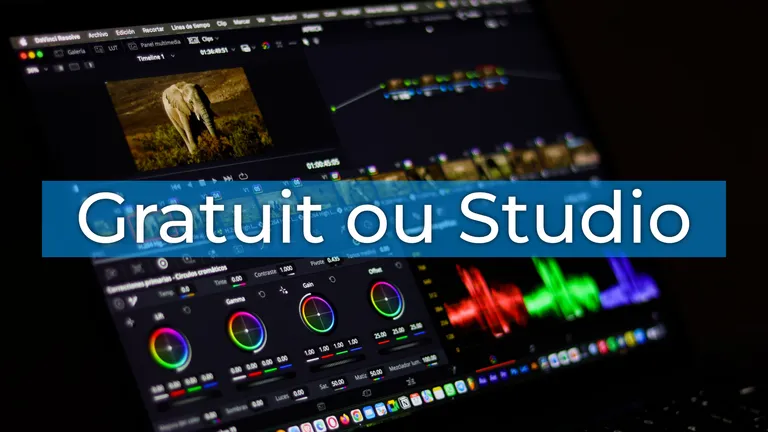
- DaVinci Resolve.
- Adobe Premiere Pro.
- After Effects.
- Sometimes even Photoshop for visuals.
You learn everything that helps you gain efficiency and quality:
- The basics.
- Advanced techniques.
- Pro shortcuts.
- Best practices.
YouTube: useful, but not enough to keep progressing
Let's be clear: YouTube is still an excellent resource for discovering a topic, finding a quick fix or exploring new ideas... But it should be seen as a complement, not as your main solution.
👉🏼 A course is still far more effective to:
- Build solid skills.
- Follow a complete path.
- Become an editor or videographer.
Feedback, quality and support: what YouTube can't offer
One often underestimated point 🤏🏼: support (it's often what makes the difference between stalling and progressing).
In a course, you get:
- Feedback on your work.
- A learning framework.
- Measurable progress.
- Sometimes a community.
On YouTube:
- No feedback.
- No follow-up.
- No real way to measure progress.
Video course vs YouTube: the key takeaways
Learning video on your own on YouTube can work... but it's often slow, frustrating and inefficient. A video course, on the other hand, lets you:
- Follow a structured curriculum.
- Develop concrete skills.
- Master software and techniques.
- Save time.
- Build a real professional video project.
Video training with Creator Academy
If you're looking for a structured, hands-on and truly effective video course, Creator Academy offers a complete path (taught in French) to develop your skills in video editing, shooting and content creation.
Unlike scattered lessons on YouTube, you follow a clear curriculum, designed to take you from beginner to job-ready level in many software applications.
You get access to organized resources, real projects and a method built for today's market. The goal is simple: helping you master the essential techniques, build a solid portfolio and move toward a career as an editor or videographer.
👉 Get in touch with Creator Academy and start turning your skills into real projects today.
FAQ - Professional video course or learning on your own on YouTube?
Can you learn video editing on YouTube alone?
Yes, but it takes a lot of time, discipline and a strong ability to structure your own learning.
How long does a video course take?
It depends on the curriculum: from a few hours to several months for a complete path.
Does a course help you find a job?
It doesn't guarantee a job, but it greatly increases your chances thanks to the skills and portfolio you build.
Who are Creator Academy courses for?
The courses are for content creators, entrepreneurs, freelancers and independent workers who want to grow their visibility, audience or income through digital media, even without advanced technical skills.